
How Construction Sites Can Reduce Waste Volume Without Permanent Shredding Plants

Construction projects generate enormous amounts of waste. Concrete offcuts, timber, packaging, mixed debris, and contaminated materials quickly pile up, taking up valuable space and driving disposal costs higher. Traditionally, contractors relied on fixed shredding plants or external recycling facilities to handle this problem. However, permanent installations are expensive, inflexible, and often impractical for temporary or mobile job sites. Today, many contractors are turning to mobile waste shredding equipment as a smarter alternative, including solutions like the Komplet Krokodile Mobile Slow-Speed Shredder, developed by Komplet, which allows construction sites to reduce waste volume directly on location without investing in permanent shredding plants.
The challenge of waste volume on construction sites
Every construction site faces the same core issue: waste accumulates faster than it can be removed. Large, bulky materials take up space, restrict movement, and create safety hazards. At the same time, frequent hauling to off-site facilities increases fuel costs, labor hours, and project delays.
Permanent shredding plants are not a realistic option for most projects. They require dedicated space, significant capital investment, permitting, and long-term planning. For short-term projects, urban sites, or contractors working across multiple locations, fixed installations simply do not make economic sense.
This is where mobile slow-speed shredders become a practical solution for construction site waste reduction.
What makes mobile shredding different
Mobile shredding equipment is designed to move where the work is. Instead of transporting waste to a distant facility, the machine comes to the job site. This approach shifts waste handling from a centralized model to an on-site waste processing solution.
Slow-speed shredders, in particular, are well suited for construction environments. They use high torque at low rotational speeds, allowing them to process bulky and mixed materials safely. Unlike high-speed shredders, they reduce the risk of sparks, excessive dust, and uncontrolled material ejection.
For construction teams, this means waste can be processed steadily and predictably without disrupting other site operations.
Reducing waste volume at the source
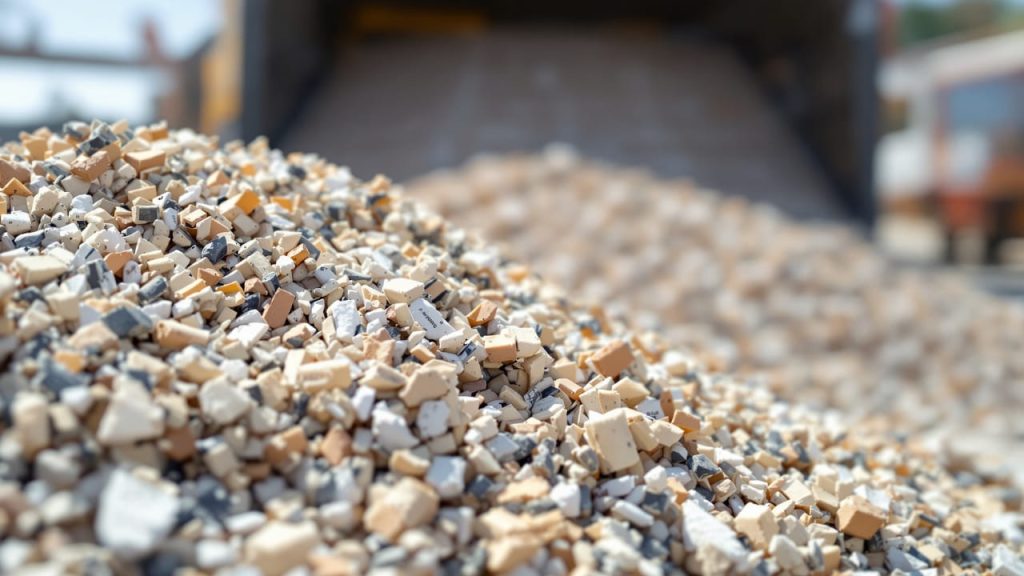
The most immediate benefit of on-site shredding is construction debris volume reduction. Shredding bulky materials into smaller, more uniform pieces dramatically reduces their overall volume. Fewer air gaps between materials means more efficient use of containers and trucks.
By reducing volume at the source, construction sites can:
- Decrease the number of haulage trips
- Lower transportation and disposal costs
- Free up valuable working space
- Improve overall site organization
This approach is especially valuable on tight urban job sites where space is limited and logistics are complex.
Eliminating dependence on permanent shredding plants
Permanent shredding plants lock contractors into fixed workflows. Waste must be transported, queued, processed, and returned or disposed of according to someone else’s schedule. Any disruption in that chain can delay a project.
Mobile waste shredding equipment removes this dependency. Contractors gain direct control over when and how waste is processed. Shredding can be done daily, weekly, or only when material volumes justify it.
This flexibility is critical for projects with changing timelines, phased construction, or unpredictable waste streams. It also allows companies to take on projects in locations where access to fixed recycling facilities is limited or nonexistent.
Handling mixed and contaminated materials safely
Construction waste is rarely clean or uniform. Wood may contain nails, plastic may be mixed with insulation, and demolition debris often includes metal fragments. Slow-speed shredders are designed to handle these realities.
Because of their torque-driven design, they can process mixed and contaminated materials with less wear and fewer breakdowns. This makes them ideal temporary shredding solutions for construction sites that deal with unpredictable waste inputs.
By pre-processing materials on-site, contractors can also improve downstream recycling efficiency. Shredded material is easier to sort, screen, or reuse in later stages.
Improving site safety and compliance
Waste buildup is not just a logistical problem, it is a safety risk. Piles of debris increase the chance of trips, falls, and equipment damage. They can also violate site cleanliness and environmental regulations.
On-site waste processing solutions help maintain a cleaner, safer working environment. Shredding materials as they are generated prevents accumulation and keeps designated waste areas under control.
Additionally, many local regulations encourage or require waste minimization and recycling. Demonstrating active construction site waste reduction through on-site shredding can support compliance and improve a contractor’s environmental profile.
Supporting sustainability goals without added complexity
Sustainability is no longer optional in construction. Clients, municipalities, and developers increasingly expect waste reduction strategies that go beyond basic disposal.
Mobile slow-speed shredders support sustainable practices by enabling:
- Material reuse on-site where possible
- Easier separation for recycling
- Reduced carbon emissions from transport
- Lower landfill dependency
All of this can be achieved without building permanent infrastructure or overhauling existing workflows. The machine integrates into the site rather than forcing the site to adapt around it.
Economic benefits beyond disposal savings
While reduced haulage and landfill fees deliver immediate savings, the long-term financial benefits are even greater. Contractors using mobile shredding equipment often find they can:
- Bid more competitively on projects
- Take on jobs in remote or restricted locations
- Reduce downtime caused by waste logistics
- Improve overall project efficiency
For small and mid-sized contractors, this can be a competitive advantage against larger firms that rely on fixed facilities and rigid processes.
When mobile shredding makes the most sense
Not every project requires on-site shredding, but many benefit from it. Mobile shredders are particularly effective for:
- Demolition and renovation projects
- Infrastructure and road construction
- Urban developments with limited space
- Temporary or phased construction sites
- Projects with high volumes of mixed waste
In these scenarios, mobile slow-speed shredders act as a flexible tool that adapts to the project rather than constraining it.
Building a smarter waste strategy
Reducing waste volume without permanent shredding plants is not about cutting corners. It is about building a smarter, more responsive waste management strategy that aligns with modern construction realities.
By adopting mobile waste shredding equipment, contractors gain control, flexibility, and efficiency. They reduce costs, improve safety, and support sustainability goals, all while avoiding the financial and logistical burden of permanent installations.
As construction projects continue to evolve in scale and complexity, on-site solutions like mobile slow-speed shredders are becoming less of an option and more of a necessity. For contractors looking to future-proof their operations, reducing waste volume at the source is one of the most practical steps they can take.
